
Hypoglycemia in Dogs: Early Signs, Causes & Treatment (Vet Verified)

Much like high blood sugar levels in dogs, low blood sugar levels can be dangerous. Symptoms like weakness, disorientation, and even collapse are often linked to a condition known as hypoglycemia in dogs.
Whether your dog is a high-risk puppy, a diabetic patient, or a small breed, understanding the causes, recognizing the warning signs, and knowing the emergency steps is crucial.
In this vet-backed guide, we will walk you through what hypoglycemia is, how to spot the early symptoms of low blood sugar, and outline effective hypoglycemia in dogs treatment and prevention strategies.
Key Takeaways
- Hypoglycemia is the term for dangerously low blood sugar levels, which deprive the brain and body of their primary energy source.
- Puppies, toy breeds, and diabetic dogs on insulin are the highest-risk groups for experiencing hypoglycemia.
- Early signs often include sluggishness, disorientation, trembling, and weakness.
- Emergency home treatment involves immediately rubbing a simple sugar source (like corn syrup or honey) onto the dog’s gums.
A pet health tracker is essential to detect subtle indicators that often shift rapidly during blood sugar fluctuations.
What Is Hypoglycemia in Dogs?

The word hypoglycemia simply means “low blood sugar.” Glucose, or blood sugar, is the primary source of fuel for the body’s cells, particularly the brain.
When the body’s glucose level drops too low (typically below 60mg/dL), the brain and nervous system begin to malfunction.
This can lead to a range of symptoms, from mild confusion and weakness to severe seizures and coma.
Hypoglycemia is a medical emergency because, without immediate intervention, prolonged low blood sugar can lead to irreversible brain damage or death.
Causes of Hypoglycemia in Dogs
The causes of hypoglycemia in dogs can be physiological or pathological.
Physiological causes
- Sometimes called “hunting dog hypoglycemia,” this occurs in adult dogs after a long period of hard exercise.
- Small dogs don’t have sufficient fat and muscle to store energy, meaning they can exhaust their available glucose quicker.
- Consumption of certain substances like some medications can trigger the body to produce too much insulin or consume glucose too quickly.
- Prolonged lack of adequate food can lead to glucose depletion.
Pathological causes
- Severe liver disease
- Kidney disease
- Pancreatitis
- Addison’s disease
Early Signs of Low Blood Sugar
Detecting the early signs of low blood sugar is essential for preventing a medical crisis. These signs often appear before the more dramatic neurological events.
- Lethargy and weakness
- Disorientation or confusion
- Trembling or shivering
- Restlessness or pacing
- Unusual hunger
- Ataxia (wobbly walk)
If these early signs are ignored, the condition progresses to severe neurological signs like seizures, collapse, coma, and potentially death.
“I got the Maven sensor for my 14-year-old Chihuahua mix with heart and trachea issues. It gave me back peace of mind – I can track her RRR, BPM, drinking, and activity anytime and know instantly if something’s wrong. Highly recommend!”

★★★★★
Chiara De Luca
Titti
Signs of High Blood Sugar in Dogs vs Low Blood Sugar
It’s easy for pet parents to confuse the symptoms of low and high blood sugar in dogs, but they have different causes and require opposite treatments.
If you’re searching for signs of high blood sugar in dogs, here’s what you need to know:
Hypoglycemia (Low Blood Sugar)
- Primary Symptoms: Rapid-onset weakness, confusion, trembling, collapse, and seizures.
- Energy Level: Depressed, lethargic, weak.
- Emergency Action: Give sugar immediately (corn syrup/honey on gums).
- Cause: Too much insulin, intense exercise, missed meals, or severe illness.
Hyperglycemia (High Blood Sugar/Dog Diabetes)
- Primary Symptoms: Increased thirst and increased urination.
- Energy Level: Generally normal in early stages; later leads to weight loss and chronic lethargy.
- Emergency Action: Requires vet assessment and insulin injection.
- Cause: Not enough insulin, insulin resistance, or chronic illness.
Hypoglycemia in Dogs Treatment: What Vets Do
Once you’ve administered emergency sugar at home, transport your dog immediately to the vet for definitive hypoglycemia in dogs treatment.
- IV Dextrose (glucose): The vet will place an intravenous (IV) catheter to deliver a sterile glucose solution (dextrose) directly into the bloodstream. This rapidly restores blood sugar levels.
- Blood Work: The vet will run blood tests to confirm the hypoglycemia and investigate the cause.
- Monitoring and Stabilization: The dog will be closely monitored until blood sugar is stable and they can eat and maintain their own glucose levels.
At-Home Safety Tips for Dogs Prone to Low Blood Sugar

If your dog is in a high-risk group (diabetic, puppy, or toy breed), follow these critical safety measures:
- Always have emergency sugar ready
- Implement strict feeding schedules
- Follow a consistent insulin routine if your dog is diabetic
- Never use sugar instead of food
When Hypoglycemia Is an Emergency
Hypoglycemia is always an emergency. While you can initiate life-saving home treatment by rubbing sugar on the gums, this is only a temporary measure.
Seek immediate vet attention if your dog:
- Experiences a seizure or collapses.
- Is disoriented or unresponsive.
- Does not rapidly improve within 5–10 minutes of receiving oral sugar.
Even if the dog recovers quickly at home, a veterinary visit is essential to determine the root cause and prevent future, more severe episodes.
How Maven Pet Helps Track Warning Signs in High-Risk Dogs
“Changes in behavior or activity are often the earliest signs of blood sugar changes. Monitoring these shifts helps us treat hypoglycemia before it becomes dangerous.” — Carolina Domingues, DVM, Veterinarian at Maven Pet
Detecting subtle shifts in behavior or activity can be challenging, but it is crucial for pets prone to blood sugar fluctuations.

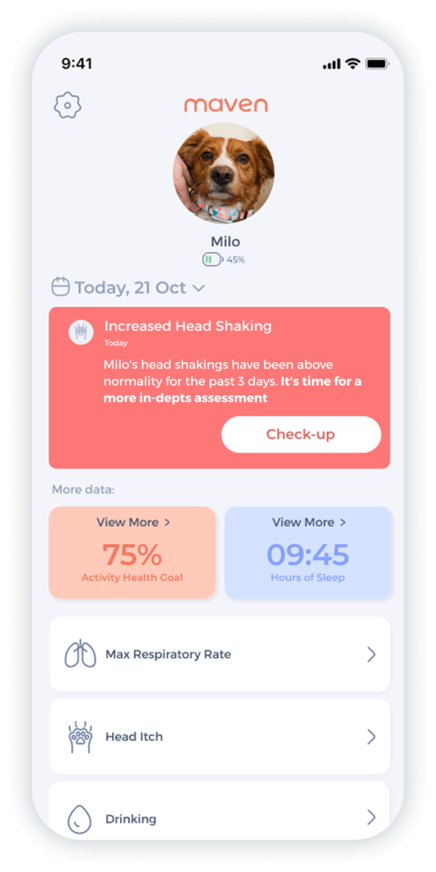
Monitor heart rate, respiratory rate, activity & rest, drinking, itch behavior.
The Maven Pet Health Monitor is a dog health tracker that provides crucial data on vital indicators that often change when blood sugar levels are unstable.
- Activity and Rest: Hypoglycemia often manifests first as unusual lethargy, weakness, or restlessness. The tracker establishes a baseline and alerts you to significant drops in activity or abnormal rest patterns, which could signal a drop in blood sugar.
- Heart Rate and Breathing: While the dog is resting, the monitor tracks their resting heart rate and respiratory rate. These metrics can shift rapidly due to the stress and physical compensation associated with low blood sugar.
- Share Data with Your Vet: All data is compiled into clear reports in Maven’s pet health app. This provides your vet with valuable data on the timing of energy drops or sudden restlessness, helping them adjust insulin or feeding schedules more accurately, especially helpful for dogs managing dog diabetes.
Takeaways Recap
- Always have an emergency sugar source available for high-risk dogs.
- Watch for subtle lethargy, confusion, or trembling.
- If you suspect low blood sugar, rub sugar on the gums immediately and head to the vet.
- Use technology like the Maven Pet Health Monitor to track daily changes in activity and rest that signal potential blood sugar instability.
Maven Pet focuses on improving the quality of life of our pets with technology, using artificial intelligence (AI) to enable proactive pet care. By accurately collecting and monitoring pet data 24/7 and flagging any irregularities, Maven Pet empowers pet parents and veterinarians to stay ahead of potential health issues, ensuring the well-being and longevity of our beloved companions.